How to choose a photo for a hairstyle try-on
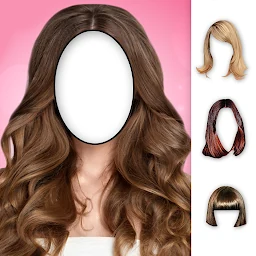
Choose a portrait for a hairstyle try-on in Hairstyles. Check the angle, lighting, background and framing before adding a hairstyle sticker to your photo.
Start with a practical portrait
For your first try-on, choose a sharp, front-facing portrait with an uncovered face, a visible hairline and room around your head. The source photo should give you clear reference points for placing a hairstyle. A striking selfie with a turned head, hair across the eyes and a strong filter may be harder to use than a simple picture against a wall. Check your gallery first. If every photo cuts off the top of your head or hides your face behind hair, taking a fresh portrait may be easier than adjusting every sticker to fit.
Keep the camera around eye level
Look into the lens and keep your head fairly upright. Avoid holding the phone far above you or shooting from below: a straightforward front view is a useful starting point. Use a relaxed, familiar expression so the hairstyle becomes the main change you compare. If taking the picture yourself, support the phone securely and use the camera timer if available. Take a few shots in the same pose. You do not need a dramatic angle here; aim for a clear view of both sides of your face and your forehead.
Check the light around your hairline
Try facing a window with soft daylight. Can you see your forehead, temples and the edge of your hair clearly? A bright window behind you or a hard stripe of sunlight across your face can make these areas difficult to judge. If one side disappears into shadow, change your position and take another picture. Instead of relying on a strong brightening filter, start with a photo that already shows the details. You do not need studio lighting or a special photographic backdrop for this task.
Move your hair back and leave room
Where possible, pull your hair back and move loose strands away from your forehead and cheeks. This reduces overlap between your own hair and the added hairstyle. Remove a hat; you can also put aside large accessories if they interrupt the outline. Do not crop tightly against the top of your head. Leave some space above and beside it, and include your shoulders when exploring longer styles. There is no fixed margin that suits every hairstyle: check that the intended outline fits. Keep the uncropped original in case you need a wider view later.
Use a simple background and a clear original
A plain wall or another uncluttered surface makes the edge of a hairstyle easier to examine. Avoid branches, patterns and objects that appear to extend your hair. Wipe the camera lens before shooting, then open the photo at a larger size to check your eyes and eyebrows for sharpness. Use the original gallery image if you still have it, rather than a screenshot or a repeatedly shared copy. Leave face-shaping filters out of the preparation so other changes to your portrait do not distract from the hairstyle comparison.
Test two candidate photos in Hairstyles
If two portraits seem suitable, try the same hairstyle on each. Hairstyles uses hairstyle stickers that you can resize and rotate. Look for the portrait where you can align the sticker with your hairline without covering your eyebrows or leaving distracting strands of your original hair around the edges. Leave text and accessories until later so you can focus on choosing the base photo. If both portraits are awkward because of the angle or crop, take another shot. Once you choose an original, use it consistently for subsequent versions.
Run a final five-question check
Open your chosen picture and ask: is the whole face visible? Is the hairline easy to see? Is the image sharp? Is there room for the new length? Does the background let you judge the outline? If so, you are ready to try hairstyles and save the versions you like. A suitable portrait makes a montage easier to work with, but it does not make the result an exact haircut prediction. Treat the finished picture as a visual idea, and discuss how a cut would sit on your own hair with a stylist.
Featured in this story
Woman Hairstyles
Hairstyles · 5M+
Explore